After the house permit
Lot clearing
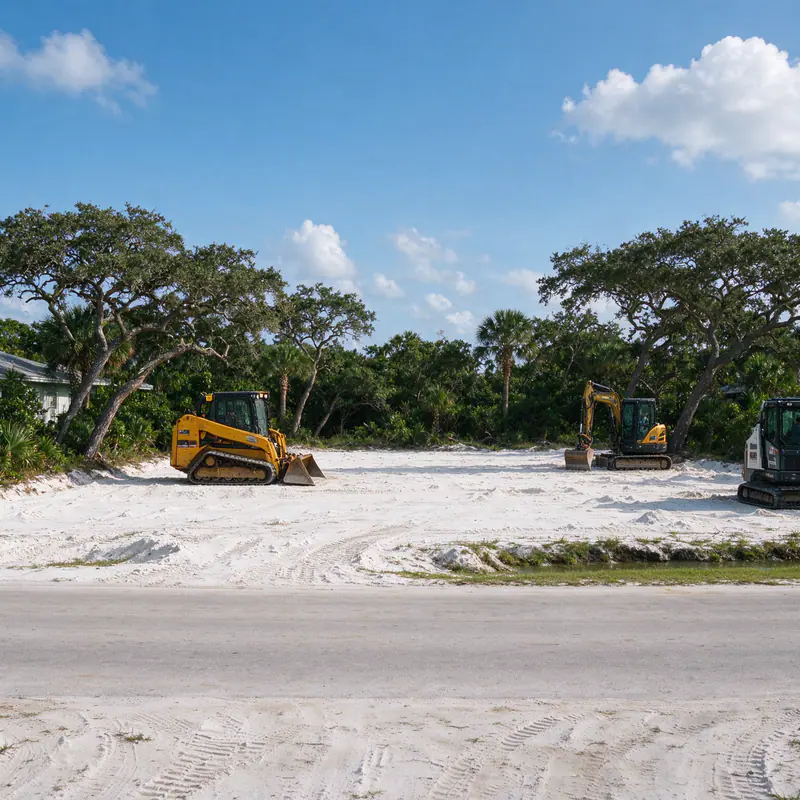
A platted lot opened for the slab, driveway and utilities once the home permit is issued, with the keepers marked, silt fence up and the swale left clean.
Ormond-by-the-Sea, Volusia County
Building on a vacant lot in Ormond-by-the-Sea, or cutting back scrub around your home? Volusia County's tree rules apply here, and the first thing we check is whether the lot is vacant or lived in.
What changes a clearing job in Ormond-by-the-Sea
Start with the land
Vacant lots in unincorporated Volusia need a tree removal permit, with protected trees in the setbacks kept.
Lot clearingUnderbrushing needs no tree permit, but protected trees nearby must not be harmed.
Brush clearingTrees of 6 inches and up in the setbacks are protected during construction, so they are fenced first.
Selective clearingGround below grade, with the grindings raked level on fast-draining sand.
Stump grindingServices
After the house permit
A platted lot opened for the slab, driveway and utilities once the home permit is issued, with the keepers marked, silt fence up and the swale left clean.
Palmetto and underbrush
Saw palmetto, gallberry, wax myrtle and vines cut back to ground level, including the brush Palm Coast treats as a fire hazard beside a home.
Keeping the good trees
Brush and unwanted trees out around the oaks and pines you are keeping, with the keepers flagged before any machine arrives and the permit list in order.
Below grade
Stumps ground below grade in lawns, along driveways and in the yard, with a plain answer on when a stump has to come out whole instead.
How the work runs
We check first whether it's a vacant lot or an owner-occupied home, because the county treats them differently.
We mark and fence the protected trees in the setbacks and any historic tree in the building area.
We take out the brush and permitted trees, grub the footprint and keep the sand from blowing with chips or quick sod.
We haul the debris at Volusia County disposal rates and walk the lot with you at the end.
Last Updated:
Ormond-by-the-Sea is an unincorporated community of about 7,300 people on the barrier island north of Ormond Beach, roughly 17 miles from Palm Coast. Because it isn’t a city, Volusia County’s tree rules apply. Sunward Palm Coast Land Clearing clears lots, brush and stumps there, and we start with the question the county asks first: is this a vacant lot or someone’s home?
Volusia County requires tree removal permits for vacant lots and for non-residential and commercial property. Owner-occupied single- and two-family homes zoned residential are exempt, except for trees in wetlands or upland buffers. Underbrushing needs no tree permit, but protected trees in setbacks and historic trees in the buildable area must not be harmed, and underbrushing isn’t allowed in wetlands or buffers. When a house is built, trees of 6 inches and up in the setbacks, pines and palms included, are protected, along with historic trees in the buildable area. Residential lots need one tree per 2,500 square feet, and replacement is figured at 15% of the cross-sectional square inches removed, or 7% for sand pine. Those rules make selective clearing our natural plan on a lot with trees along its edges.
The ground is coastal sand. A soil sample at the community’s center finds a Palm Beach-Urban land-Paola complex, excessively drained, so wet ground is rarely the problem; blowing and washing sand on a bare lot is, and we cover it quickly with chips or sod. Dry sand also suits gopher tortoises, and work within 25 feet of a burrow needs an FWC permit. We haul the debris, since burning can’t meet Florida’s setbacks on a residential street, and Volusia County lists yard trash at $31.44 a ton in the state’s disposal fee table.
On a vacant lot you’re building on, the county’s tree removal permit comes first, and we keep and protect the trees of 6 inches and over in the setbacks while we clear and grub the house footprint. At an owner-occupied home, removing a tree generally needs no county permit unless it stands in a wetland or upland buffer, but underbrushing still mustn’t harm protected setback trees or historic trees. Either way our lot clearing page covers the method, and we grind the stumps near trees that stay instead of pulling them, so their roots don’t come out too.
Where trees have to be replaced, the county’s 15% of cross-sectional inches makes a big removed tree add up fast, so keeping one healthy tree in a setback can save you several replacements. Our prices for the clearing itself follow the land clearing cost guide.
Why the order matters
The county treats a vacant lot and an owner-occupied home differently, so we settle that first.
We fence the protected trees in the setbacks before clearing so construction doesn't harm them.
Places, routes and the permit office
Volusia County Environmental Management: tree removal permits for vacant lots and non-residential property in unincorporated Volusia County.
Volusia County requires tree removal permits for vacant lots and non-residential property. Owner-occupied single- and two-family homes zoned residential are exempt, except for trees in wetlands or upland buffers.
Underbrushing needs no tree permit in unincorporated Volusia County, but protected trees in setbacks and historic trees in the building area must not be harmed, and underbrushing isn't allowed in wetlands or buffers.
Our typical range for a quarter-acre lot is about $800 to $3,000. Volusia County disposal runs $31.44 a ton for yard trash in the state's table, and any county replacement trees are separate.
Replacement is figured at 15% of the cross-sectional square inches of trees removed, or 7% for sand pine, alongside a requirement of one tree per 2,500 square feet on residential lots.
No. It is an unincorporated community in Volusia County, so Volusia County's tree rules apply rather than the City of Ormond Beach's.
Get an Ormond-by-the-Sea clearing estimate
Send the address, whether it is a vacant lot or your home, and a few photos.
(386) 465-4658Outside these hours, emergency calls only.