Last Updated:
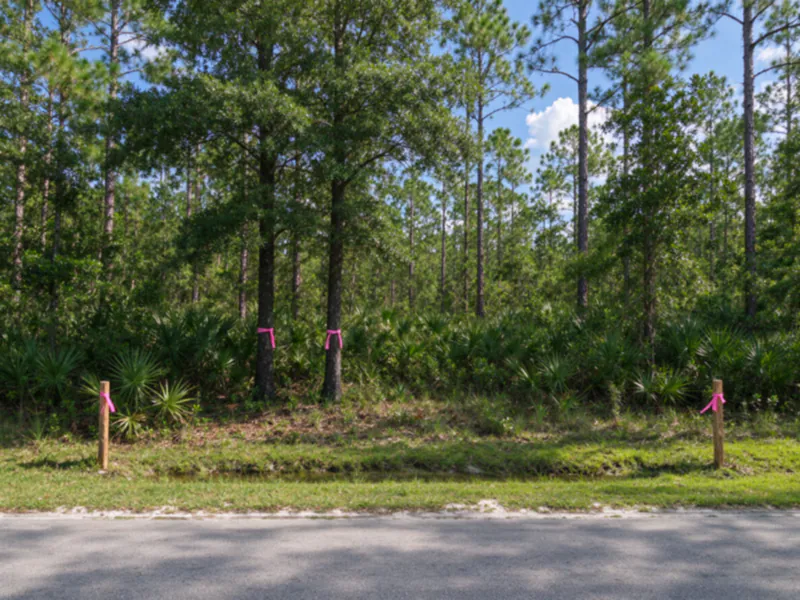
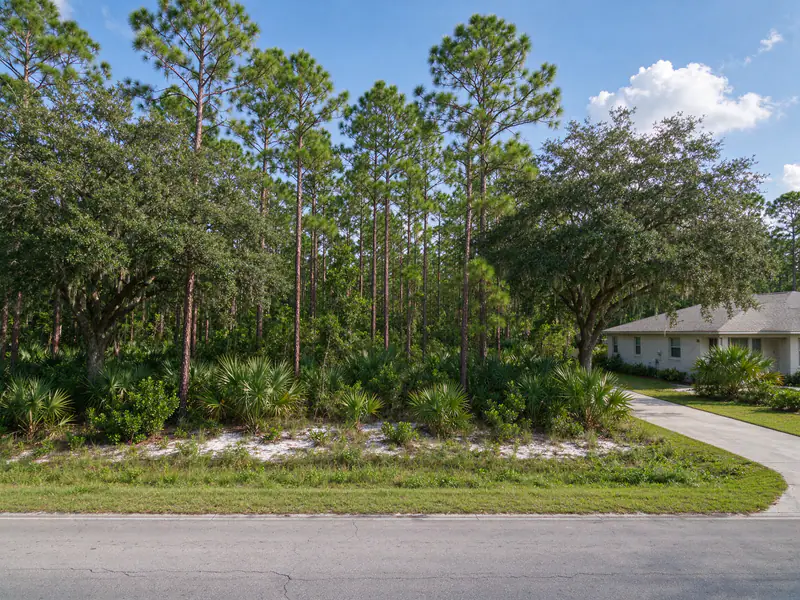
Your house permit is issued, the builder wants a start date, and the lot is still a wall of slash pine, oak and saw palmetto. Sunward Palm Coast Land Clearing clears platted Palm Coast lots for new homes, and we plan every one around two things: the permit date and the trees you want to keep.
The city decides when a lot can be cleared. Palm Coast won’t let you clear or remove trees until the home’s building permit is issued, and the erosion control has to be up first. The one exception is the vacant lot next to a home you already own. So most of our work on a lot happens before a machine ever arrives: the walk, the keep list and the scope.
What happens when we walk your lot
We walk the lot with your survey in hand. We find the corner stakes and the lot lines first, because clearing a few feet onto the neighbor’s lot is one of the easiest mistakes to make in the woods. Then we check and flag every tree the survey shows as staying, and note trunk sizes against the permit list: anything 6 inches or more across at 4.5 feet needs a Palm Coast tree removal permit before it comes down.
We also look for anything that could stop a clearing day: gopher tortoise burrows in the drier sand, low spots that hold water after rain, overhead lines, and room for a loaded truck and a tracked machine to get in from the street. You get a written scope that names the method for each part of the lot, what happens to the stumps and where the debris goes; our guide to what land clearing includes lays out the usual lines.
Have the survey already?
A survey that shows the trees and the house footprint is enough for us to start your scope before the permit is issued.
Will the stumps cause trouble under the slab?
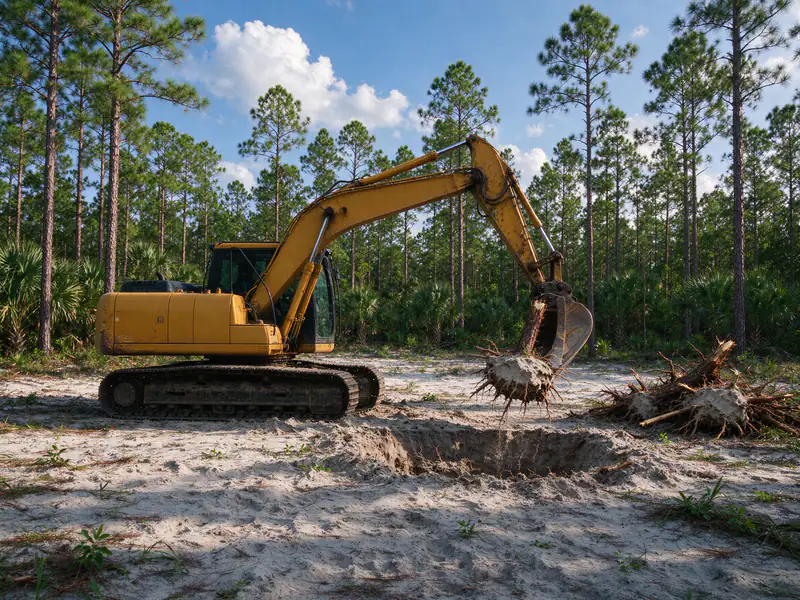
They will if they stay. Clearing takes what stands above the ground; grubbing takes what’s below it: stumps, root mats and the dark organic layer on top of the sand. Under the slab, the driveway and the pad your builder compacts, all of that comes out, which is why clearing and grubbing is its own line on our scope. Buried wood rots and leaves voids, and concrete over a void settles and cracks.
Outside the footprint, pulling every stump does more harm than good. It strips the sand bare, makes more debris to haul and tears into the roots of the trees you’re keeping. So on most Palm Coast lots we grub where the house, driveway and utilities go, and mulch or grind the stumps at the edges. Fill, compaction and final grading follow under your builder’s engineered plan, which is a separate job from clearing. If you’re thinking of clearing the lot yourself, the same permits and the same grubbing under the slab apply.
Keeping the swale clean while we work
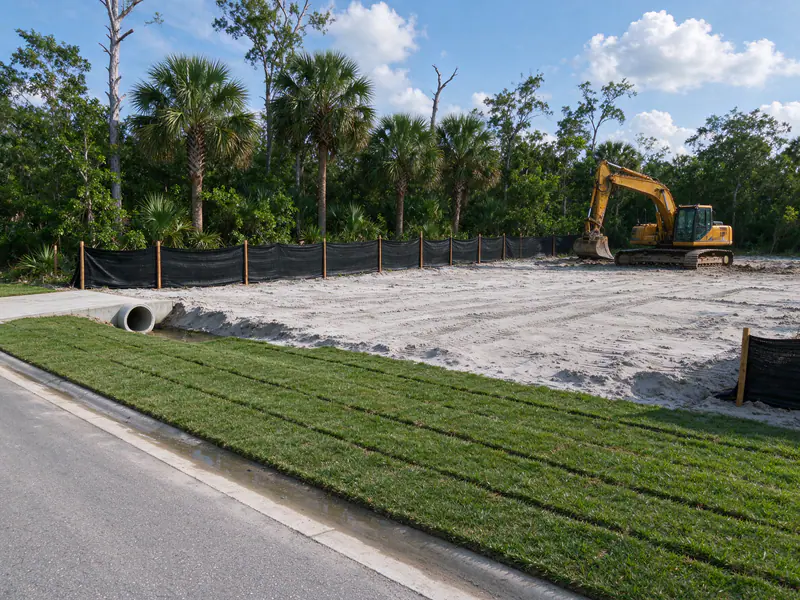
Palm Coast drains its streets through roadside swales, not curbs and pipes, and the city designs a swale and culvert plan for each new home from its survey. The strip in front of your lot is part of that drainage, and as the owner you’re responsible for keeping it clear.
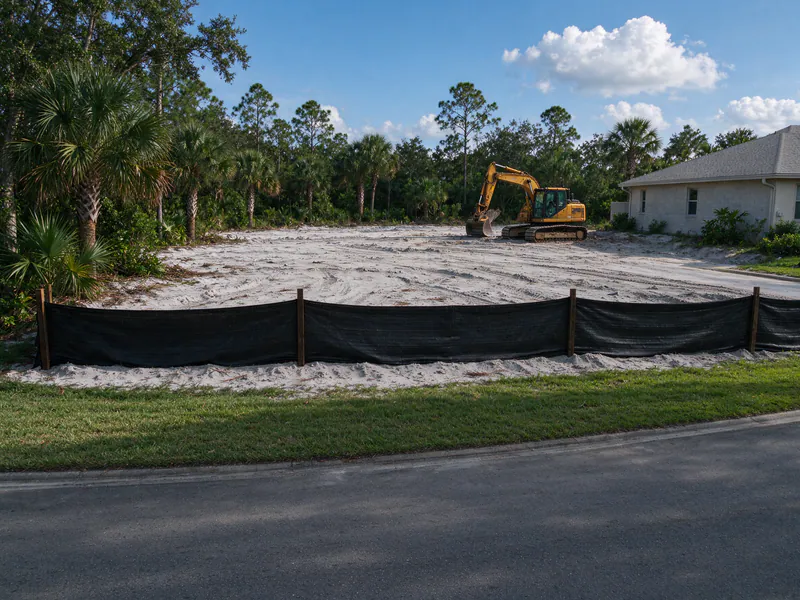
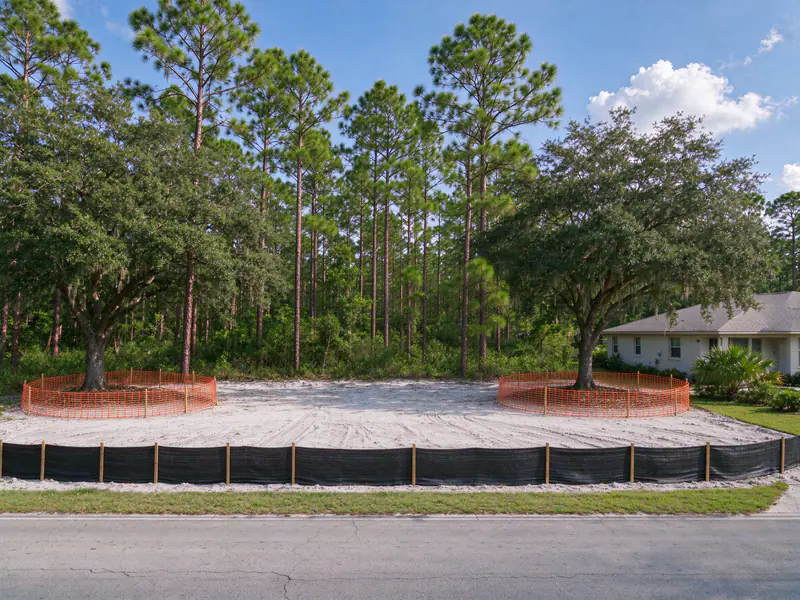
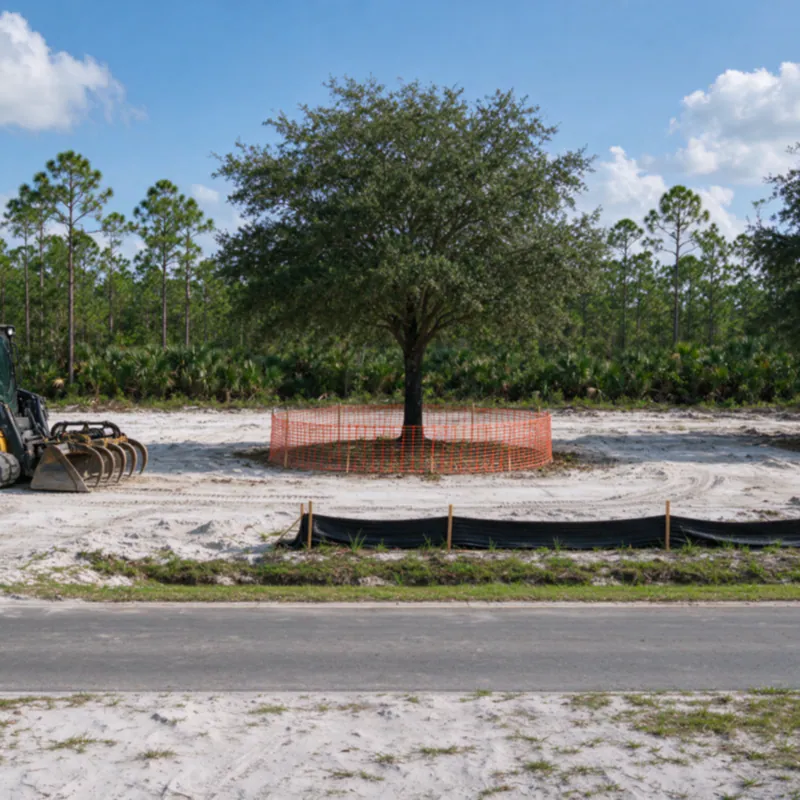
Before we clear, silt fence goes up along the frontage to keep sand out of the swale, and the city wants it left in place through construction, sod and landscaping, not just while we’re there. If the work disturbs the swale, it gets sodded with bahia grass. Your lot also has to be graded so the rear drains to the front swale and nothing runs onto a neighbor; for permits applied for from July 1, 2025, a Florida professional engineer certifies the final grading. Our guide to what to do after land clearing covers the steps between clearing and the slab.
Which trees can you keep?
Usually the ones at the edges and corners, away from the slab: a live oak in the front yard, a row of pines along the back line that screens the neighbors. Palm Coast’s permit checklist calls for one tree for every 2,500 square feet of lot, so four on a 10,000-square-foot lot, and every tree you keep counts toward that.
A tree only survives clearing if its roots do. Most of the roots sit in the top foot of soil and spread past the branches, so we fence each keeper at the drip line or beyond and keep machines, debris piles and fill outside the fence. Close to a keeper we cut brush with saws instead of the mulcher, the same way we handle selective clearing. Root damage can take a few seasons to show, which is why a tree sometimes declines after the house is finished.
Where does all the wood go?
A cleared quarter-acre lot leaves a lot of wood, and on a Palm Coast street you can’t burn it. Florida’s rules keep residential pile burns at least 300 feet from any occupied home other than yours, and no platted lot between neighbors meets that. As our Flagler County burning guide explains, that leaves two options, often combined: we grind brush and small wood into mulch that stays on the lot, and we haul the logs and stumps away. Loads go to facilities that take land clearing debris, so the haul distance is part of your price. The Palm Coast land clearing cost guide breaks the price into its parts, and our typical range for a quarter-acre lot is $800 to $3,000.
What if the lot stays wet?
Summer is the hard season. About half of Palm Coast’s 51.44 inches of yearly rain falls from June through September, and much of the city sits on poorly drained Smyrna and Myakka sands with the water table about a foot down in the wet season. A loaded machine on that ground ruts it, slows down and tracks sand toward the swale. In summer we plan around the forecast and get the silt fence up before the first storm. A lot that stays wet for weeks raises the question of clearing near wetlands, where a state permit can apply; our rainy-season guide covers the timing.
Rebates and incentives
Palm Coast and Flagler County don’t offer a rebate or incentive for clearing a residential lot. Federal cost-share for brush management exists through USDA, but it’s limited to agricultural producers and forest landowners, not house lots.
What we do on a Palm Coast lot
- Lot walk against the survey: lot lines, keepers, trunk sizes and access from the street
- Keepers flagged and fenced at the drip line before machines arrive
- Silt fence along the downhill side and the street frontage
- Brush and palmetto cut across the clearing area
- Trees on the removal list felled and cut up
- Stumps and roots grubbed out of the slab, driveway and utility areas
- Debris mulched on site, spread or hauled, as agreed in the scope
- Swale left clean and the lot walked at the end with you or your builder
Three ways to finish a cleared lot
| Clear and grub the footprint, mulch the rest | Clear and grub the whole lot | Mulch only | |
|---|---|---|---|
| Best for | Most platted home lots with trees worth keeping | Lots with no keepers, or a builder who wants bare sand edge to edge | Yards, buffers and brush, not a building site |
| Stumps | Out under the slab and driveway, ground or left elsewhere | Out everywhere | Left in the ground |
| Debris | Part spread as mulch, part hauled | Mostly hauled | Stays on site as mulch |
| Trees kept | Keepers fenced and protected | Few or none | All trees over brush size |
| What it leaves the builder | A clean pad area with shade and screening kept | A bare lot to grade | Not ready for a slab |
The finish is set by the survey, the tree permit and what the builder needs. The clearing permit's grading and sod requirements apply whichever is chosen.