Last Updated:
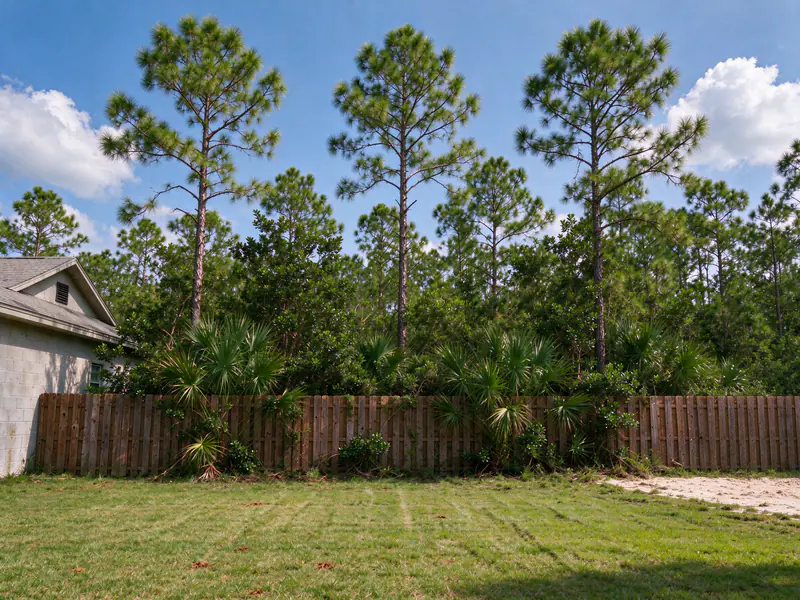
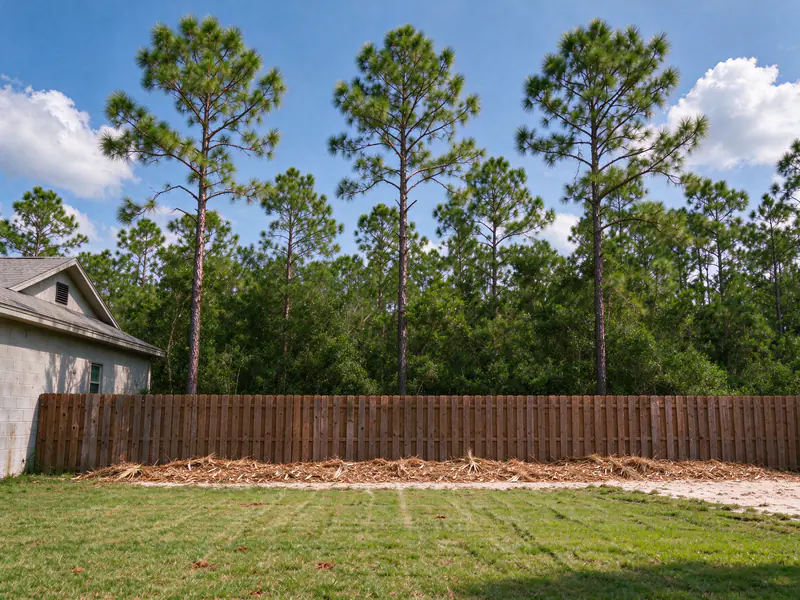
If your backyard has disappeared into palmetto, or you own acreage you can’t walk through, forestry mulching is usually the fastest way back to usable ground. Sunward Palm Coast Land Clearing mulches backyards, lot edges, firebreaks and acreage across Palm Coast and Flagler County, where you want open ground under the trees, not bare sand.
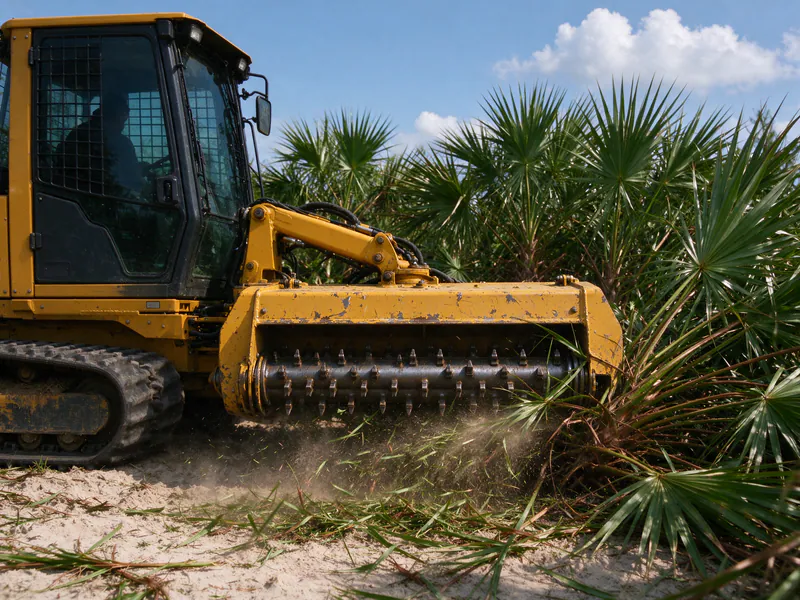
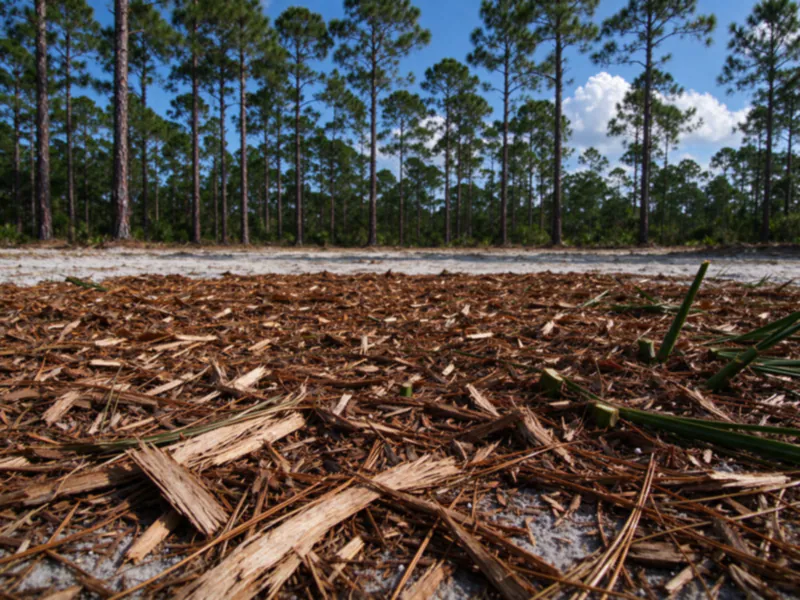
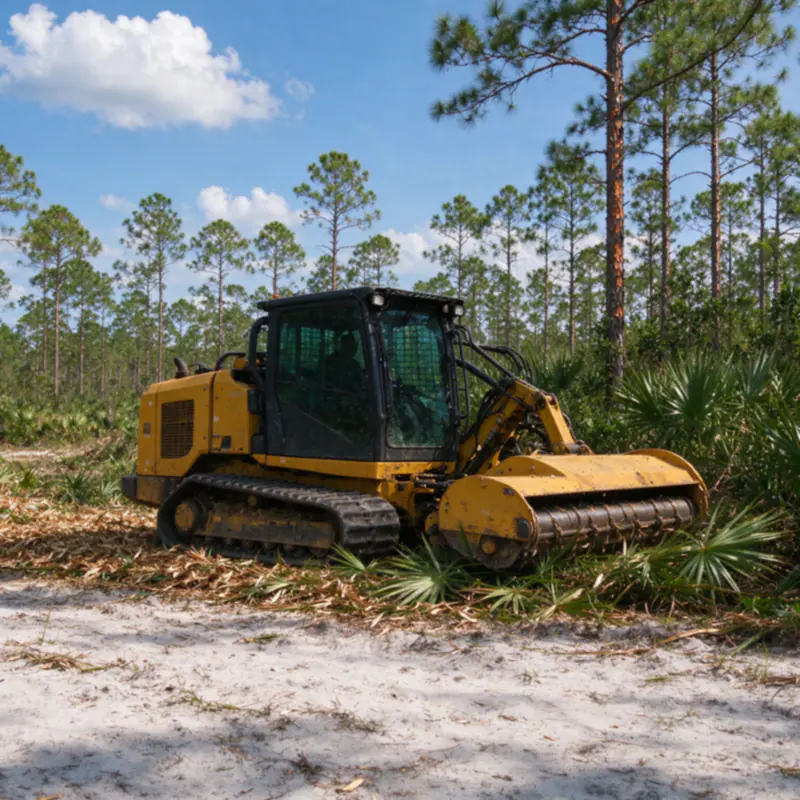
A forestry mulcher is a drum of hardened steel teeth on the front of a tracked machine. We drive it into palmetto, gallberry, wax myrtle, vines and small trees, and it grinds them where they stand and spreads the chips. Nothing gets loaded, hauled or burned, and the sand stays covered, which matters on a Palm Coast street where you can’t burn the brush. The trade-off: a mulcher works above ground, so roots and the stumps of bigger trees stay put.
What happens when we walk the area
We walk it with you and agree where the work stops. Boundaries come first, because a mulcher is fast and a few minutes past a lot line turns into a problem with a neighbor. We flag the trees you’re keeping and note their drip lines so the machine stays off their roots. If you want a tree of 6 inches or more gone, it goes on the list for a Palm Coast tree removal permit; grinding a tree down still counts as removing it.
We also look for gopher tortoise burrows in the drier sand, soft spots that won’t carry a tracked machine after rain, irrigation heads, septic lids and anything else hidden in the brush. Your written scope names the area, the finish and the trees that stay.
Not sure mulching is the right finish?
Send a few photos and tell us what the ground is for next. The answer usually depends on whether anything will be built on it.
Is mulching right for your ground?
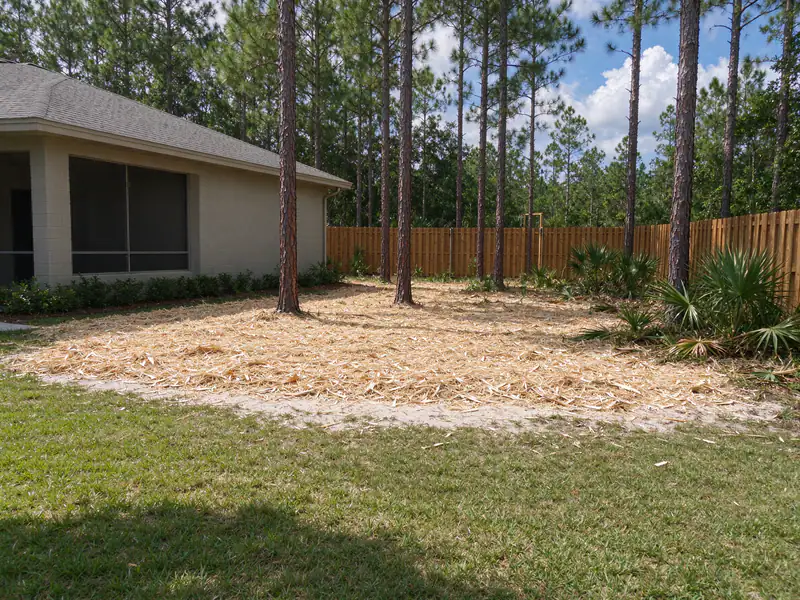
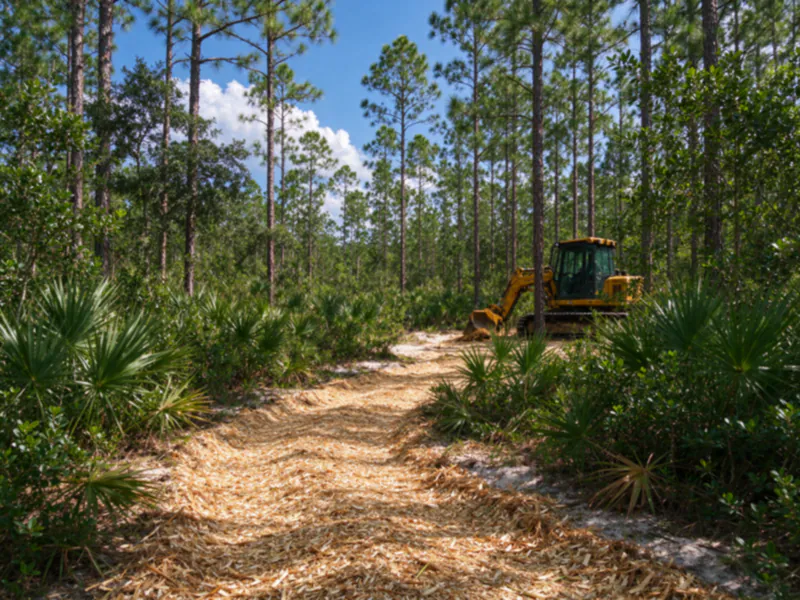
It is when the ground will stay ground: a backyard opened back to the fence, a buffer along a lot line, a trail, a firebreak, acreage thinned under its pines, or brush cut back because it’s become a fire risk next to a house. There the mulch layer helps you. It keeps the sand from washing, holds back weeds for a season and breaks down into the soil.
It’s the wrong finish anywhere a slab, driveway, pool or pad will go. Buried roots rot and leave voids under concrete, and mulch mixed into fill makes poor ground to build on, so those areas need clearing and grubbing instead. On many Palm Coast lots we do both: we grub the footprint and mulch the edges, which keeps the haul-off down and leaves the edge trees alone. Our mulching or land clearing guide walks through the choice.
Access matters too. A skid-steer mulcher needs a gap about its own width to get in and room to turn inside. Where a side yard is too tight, we use smaller machines or hand crews, which takes longer and costs more per square foot.
Will the palmetto come back?
Usually, yes, if it’s only mulched. Saw palmetto’s trunk runs along or just under the sand and the fronds grow from its tip. Mulching cuts the fronds and leaves the trunk, which sends up new ones, so a mulched thicket comes back unless you cut it again or the trunks come out. Where the ground will become lawn, we grub the trunks out by machine. For a buffer or a fire-hazard strip next to a home, mulching it and keeping it low is usually the practical answer.
Small hardwoods resprout from their stumps too. Pines don’t, so a pine-and-palmetto stand mulched under the pines stays more open than a hardwood thicket.
Can you mulch a vacant Palm Coast lot?
Not as general clearing. Palm Coast doesn’t allow clearing a vacant lot before the house permit is issued, and mulching still counts. The exceptions are narrower jobs: brush the city treats as a fire hazard because it averages over three feet within 30 feet of an existing home, and the lot next door to a home you own once the two lots are bound together. Out in unincorporated Flagler County, firewise clearing to Florida Forest Service standards is exempt from the county’s clearing rules, so mulching is the usual way we cut fuel around homes on acreage.
Gopher tortoises and a fast machine
A mulcher covers ground quickly, which is exactly why we check for burrows first. Gopher tortoises are protected in Florida, and the Fish and Wildlife Conservation Commission requires a relocation permit before any work within 25 feet of a burrow. A tracked machine driving over the sand above a burrow can collapse it, so we mark every burrow we find and keep 25 feet away unless a permit and relocation by an authorized agent come first. Where the work runs close, FWC recommends temporary exclusion fencing.
A burrow is a half-moon opening in dry sand with a fan of loose soil in front, usually on the better-drained ridges. In dense palmetto they’re easy to miss, which is why we won’t mulch a parcel nobody has walked. Our gopher tortoise guide has the details.
What sets the price
We usually price mulching by the machine hour or machine day plus the cost of moving the machine in. Our typical range is about $125 to $300 per machine hour, or roughly $400 to $2,000 per acre depending on density. The hours depend on stem size, how thick the palmetto is, how many keepers we work around, gates and access, and wet ground; even a small job carries the cost of loading and moving the machine. Our forestry mulching cost guide breaks it down, and the Palm Coast cost guide covers clearing as a whole.
When is the best time to mulch?
We mulch year round, but wet flatwoods sand goes soft in the summer rains and a tracked machine leaves ruts, so dry spells are easier on your ground. In a drought the fresh mulch is dry fuel for a while, so near houses in burn-ban weather we leave it low and even, never in heaps. Palm Coast gets about half its yearly rain from June through September, so if you have a choice, late fall through spring is the easiest window for a big mulching job, and the forecast decides the exact day.
What we do on a mulching job
- A walk of the area to mark keepers, boundaries, burrows and soft ground
- Brush, palmetto, vines and small trees ground to mulch where they stand
- Mulch left spread as ground cover, not piled
- Work kept outside the drip line of trees being kept, with saws closer in
- Stumps of small trees ground near grade by the mulching head
- A final pass along fences, lot lines and paths
Mulching compared with the other ways to open land
| Forestry mulching | Clear and grub | Mowing or bush hogging | |
|---|---|---|---|
| What it removes | Brush and trees up to about 8 in, above ground | Everything, roots included | Grass and light brush tops |
| What it leaves | A mulch layer, roots in the ground | Bare sand | Cut stems and stubble |
| Debris | None hauled | Hauled or spread | Left lying |
| Palmetto | Fronds cut, trunks resprout | Trunks and roots pulled out | Fronds cut, regrows fast |
| Fits | Yards, buffers, acreage, firebreaks | Slab, driveway, pad | Pasture and maintained fields |