Last Updated:
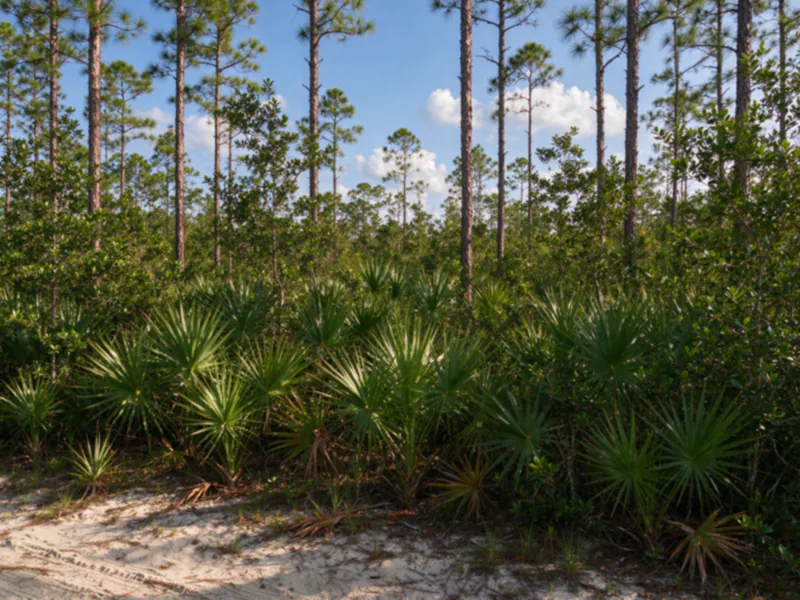
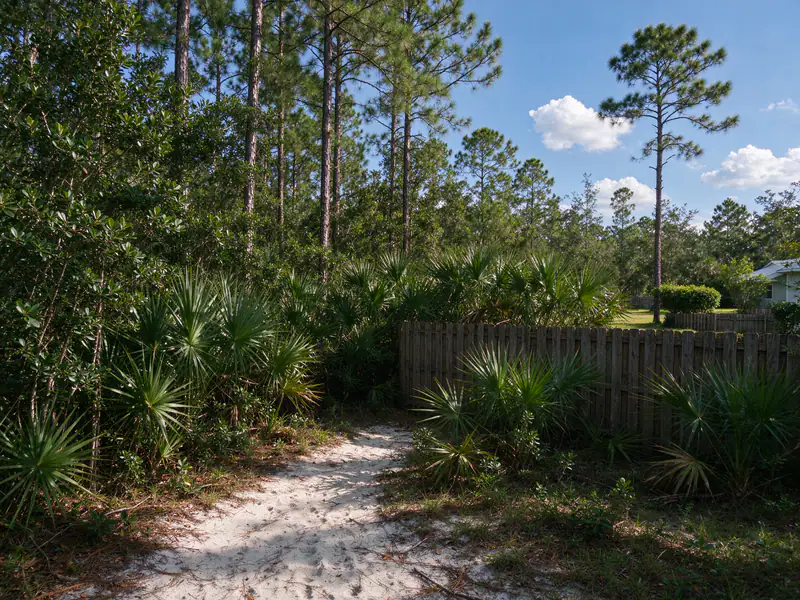
Leave a Palm Coast lot alone for a few years and the understory grows into a wall at head height: saw palmetto, gallberry, fetterbush, wax myrtle, vines and saplings under the pines. Sunward Palm Coast Land Clearing cuts that brush back to the ground across Palm Coast and Flagler County, while the pines and oaks worth keeping stay standing.
Most people call us for one of three reasons. You own a lot and got a code notice about brush next to a house, you want the back of your yard opened to the fence, or you’re cleaning up a parcel before you sell, survey or build on it.
Got a fire hazard notice?
Palm Coast’s code treats brush on an undeveloped lot as a fire hazard when it averages over three feet tall within 30 feet of an existing home. The rule names the plants: saw palmetto, gallberry, fetterbush and wax myrtle, plus pines under 5 inches across. Bigger trees aren’t brush, so you meet the rule by cutting the understory, not by clearing the lot.
The reason is the fuel. Palmetto and gallberry are oily, dense and low, so a fire in them moves fast and throws heat sideways, and brush grown against a house carries that heat to the walls. Cutting the understory and leaving the taller trees takes away most of the fuel near the ground. Our wildfire hazard guide covers how the city measures it.
What happens when we walk the lot
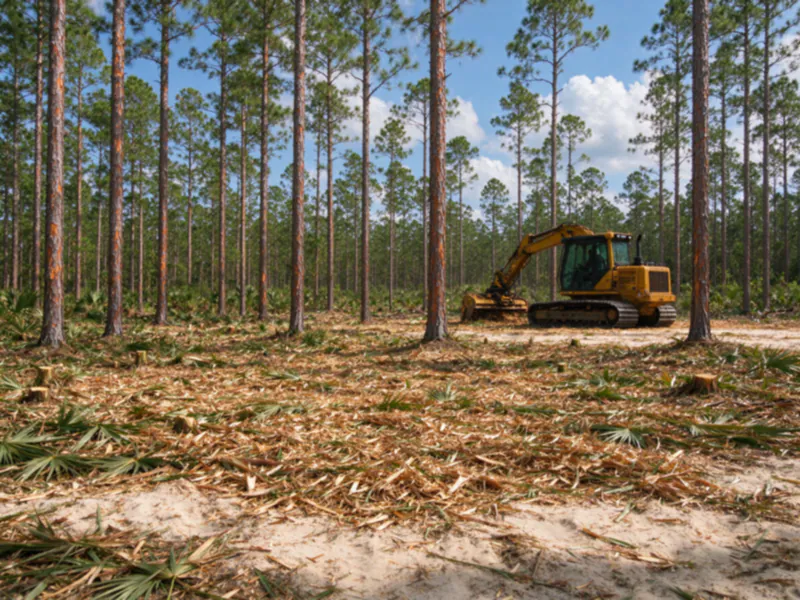
We agree where the work starts and stops. For a fire hazard strip, we measure 30 feet in from each side of the lot that borders a home; a corner lot can border more than one. We check the lot lines, because a brush cutter can cross one in seconds. Trees of 6 inches and over stay standing, and any you want gone go on the list for a Palm Coast tree permit.
We also look for gopher tortoise burrows, which are common on dry sandy lots, and anything hidden in the brush: old fence wire, irrigation, utility boxes and dumped debris that would wreck a machine.
Got a code notice?
Send us the notice and a photo of the lot. We write the scope to the rule's 30-foot measure.
How we cut it
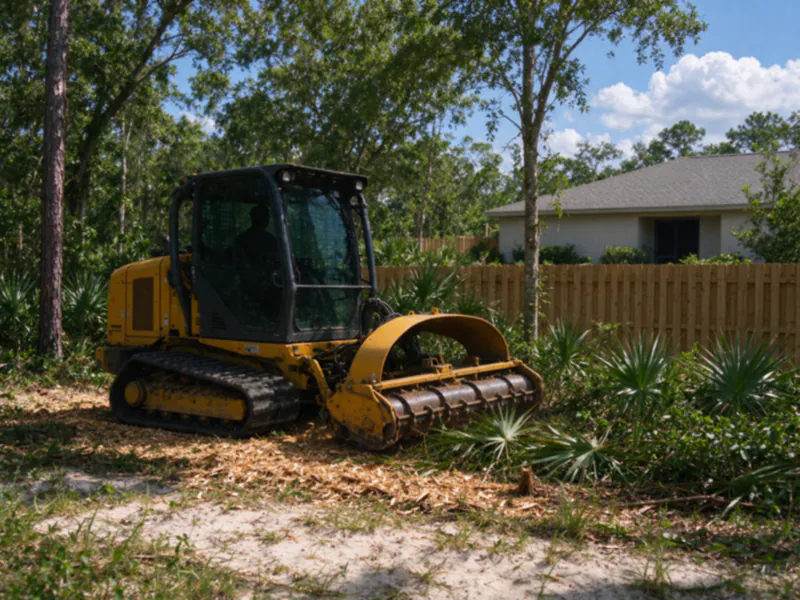
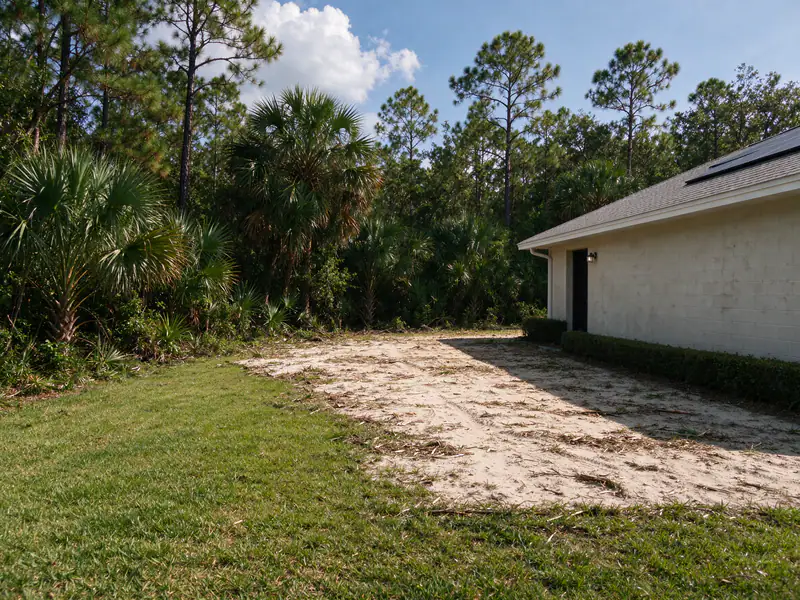
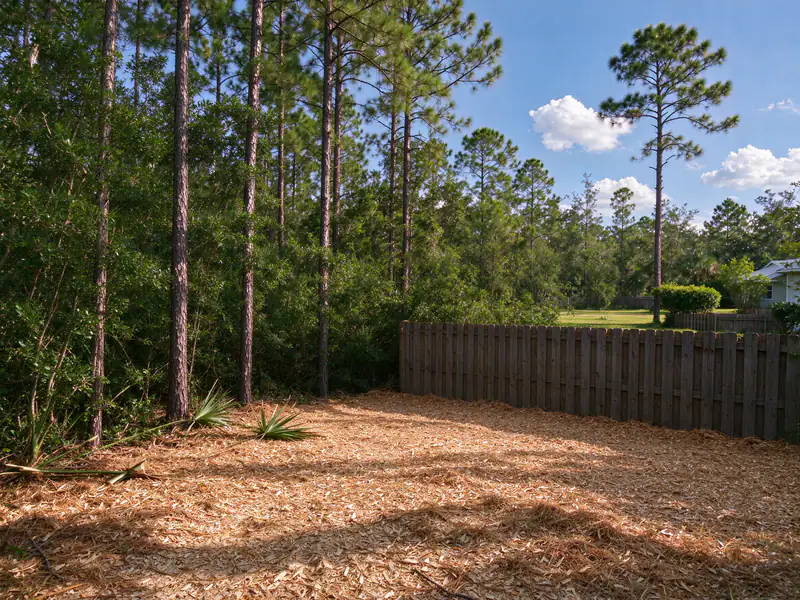
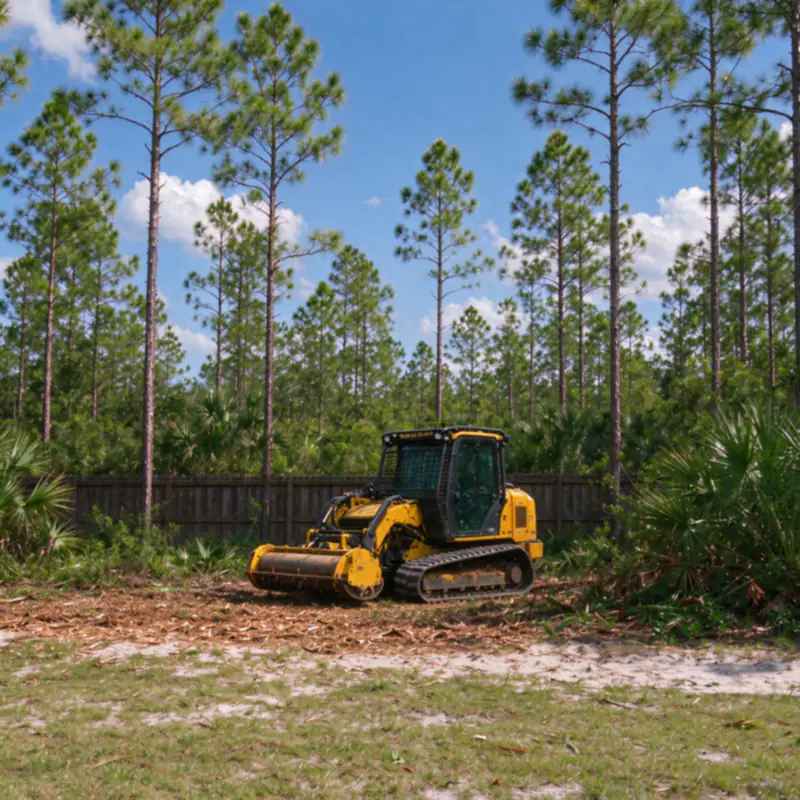
Most brush we cut with a forestry mulcher or a brush cutter, which grinds palmetto and shrubs to ground level and leaves the chips as cover. Nothing gets hauled, the sand isn’t left bare to wash into the street, and it costs less than full clearing. Near fences, keepers and houses we switch to saws and hand tools. We cut climbing vines at the base and take out dead limbs and fallen wood with the brush, since they burn as readily as palmetto.
If you want the brush gone but some of the young trees kept, tell us which ones on the walk and we flag them; picking out keepers in a thicket is the same careful work we do on selective clearing. Pines under 5 inches count as brush under the city’s rule, so small pines inside the 30-foot strip usually come out unless you ask us to keep them and the strip still averages under three feet.
On a vacant Palm Coast lot we deliberately keep it limited. General clearing waits for a house permit, so a brush job leaves the trees standing, doesn’t dig out roots and doesn’t touch the swale.
Can you clear the strip by the street?
Only by hand. Palm Coast lots front onto a strip of city property between the lot line and the road, with the roadside swale running through it. The city lets you clear vegetation there by hand and remove invasive plants on the Florida Exotic Pest Plant Council lists, but no heavy equipment, no digging or grading, no tree removal and no root disturbance. So our machines stop at the lot line, and anything beyond it we do with hand tools.
The swale is part of the city’s drainage, and as the owner you’re responsible for keeping it clear. We never leave cut brush in it, and we keep the chips back from its edge so the first heavy rain doesn’t carry them to the culvert.
Is the neighbor’s overgrown lot your problem?
No. The fire hazard rule is aimed at the owner of the undeveloped lot, not the people living beside it. If you’re worried about brush against your house, the city’s code enforcement office applies the three-foot, 30-foot measure. If you own the lot and live elsewhere, we can handle it remotely and send photos before and after.
Want the palmetto gone for good?
Mulching takes off palmetto’s fronds but leaves the trunks that creep along and just under the sand, and they send up new fronds within a season. Where the ground is going to be lawn, a pad or a driveway, we pull the trunks and root mass out by machine and level the holes, which is part of clearing and grubbing. Our palmetto root removal guide explains the difference in effort and cost.
What happens to the cut brush?
Ground in place, it leaves nothing to haul. If you want the ground clean instead, we load the cut brush and haul it to a facility that takes yard waste, and the haul distance sets most of that cost. Burning it is effectively ruled out next to homes, because Florida keeps residential pile burns 300 feet from occupied buildings other than yours.
The chips also shade out new seedlings for a while, which buys you time before the next cut. Dumped yard waste, old fence wire and other junk we find in the brush comes out and gets hauled separately; we don’t grind it into the mulch.
Keeping it under three feet
A fire hazard strip isn’t a one-time job. Palmetto and shrubs regrow from what’s left in the ground, so the strip needs watching and another cut as it grows back toward three feet. A good time for that pass is just before the dry spring months, when Palm Coast’s rainfall is lowest and the brush is driest. We price it like any clearing job, by the strip’s size, density and access; our cost guide shows our typical ranges.
What we do on a brush job
- The area and its edges agreed on the ground, including any strip along a neighbor's home
- Palmetto, gallberry, fetterbush, wax myrtle, vines and saplings cut to ground level
- Trees of 6 inches and up left standing unless permitted
- Dead limbs and fallen wood cleared from the cut area
- Chips left as ground cover or the cut brush hauled, as agreed
- Hand work around fences, keepers and the city strip by the street
Three ways to deal with brush
| Cut and mulch | Grub out | Mow or trim | |
|---|---|---|---|
| How long it lasts | Until regrowth, usually needs another pass | Palmetto gone where grubbed | Short; regrows quickly |
| Ground left | Covered with chips | Bare sand | Stubble |
| Cost | Lower | Higher, more machine time | Lowest per visit |
| Fits | Fire hazard strips, buffers, yard edges | Future lawn, pad or driveway | Ground already cleared once |