Last Updated:
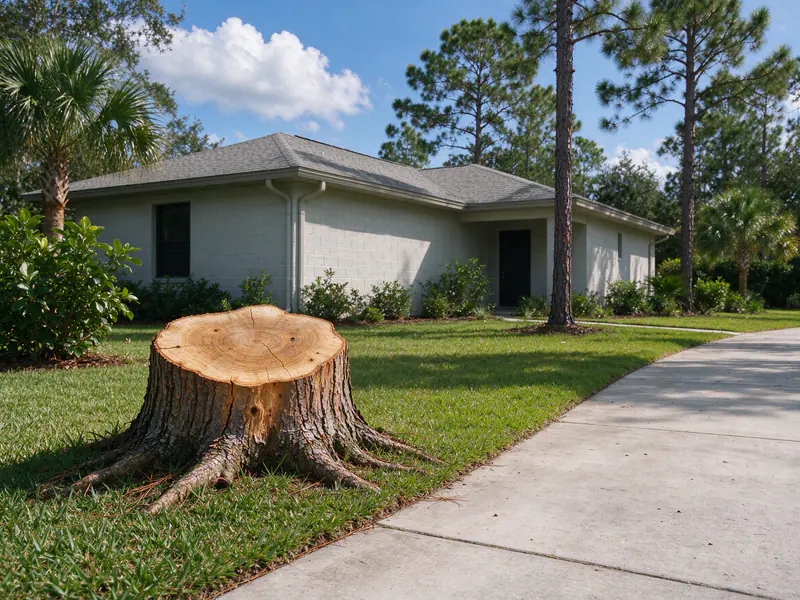
A stump in the front lawn is something you mow around for years. Sunward Palm Coast Land Clearing grinds stumps across Palm Coast and Flagler County, from a single pine that came down in a storm to the stumps left along the edges of a cleared building lot.
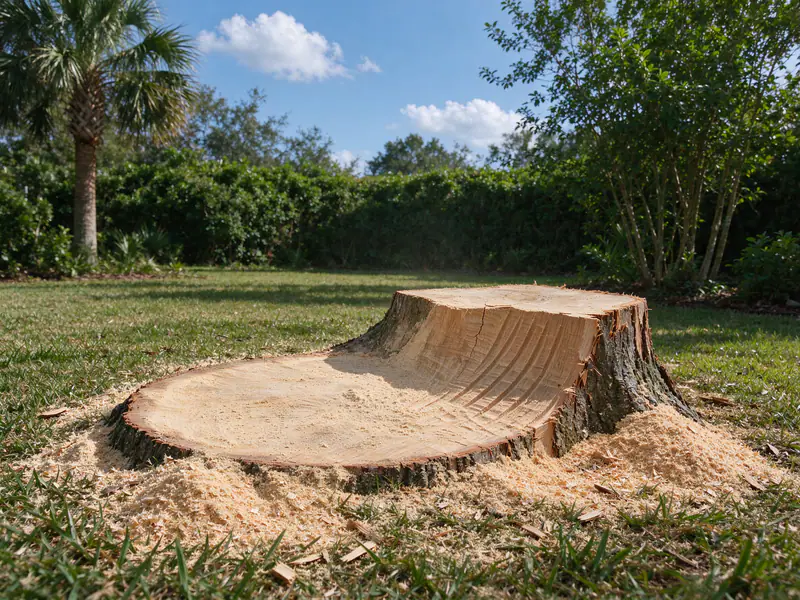
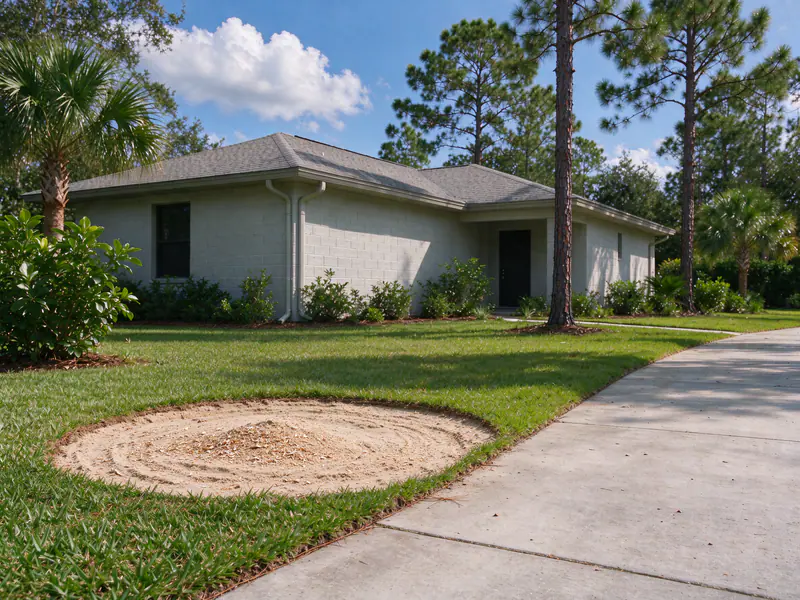
A stump grinder is a heavy toothed wheel on an arm that sweeps back and forth across the stump, chewing it down to chips until the top is below the ground. It’s quick, it’s tidy and it does little damage around the stump, which is why it’s the usual answer in a finished yard. It also leaves the roots in the ground, which is why it’s the wrong answer under anything structural.
What we look at before we grind
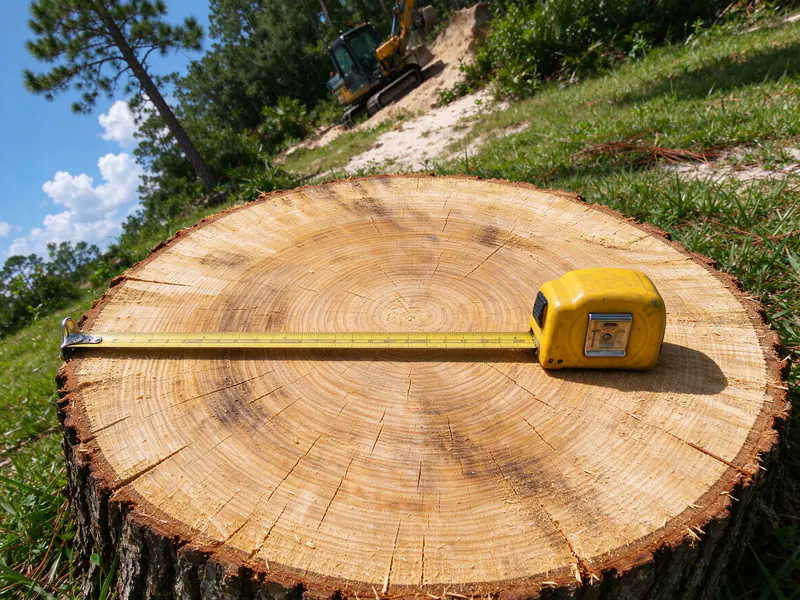
We measure each stump across the top, because grinding is priced by diameter, and note any surface roots running out across the lawn. We check access, since a grinder that fits through a side gate is smaller and slower than one that drives in from the street, and anything close to the stump: a driveway edge, a fence post, irrigation, a septic lid or the house itself.
Buried lines matter more than most people expect. Grinding goes below grade and so do the roots, and Palm Coast lots on city water and sewer have service lines running in from the street, often near the trees planted along the front. We have lines marked through Florida’s 811 system before we work near them.
Several stumps to grind?
List them with a rough size each. More stumps on one visit cost less each.
How deep do we go, and what happens to the hole?
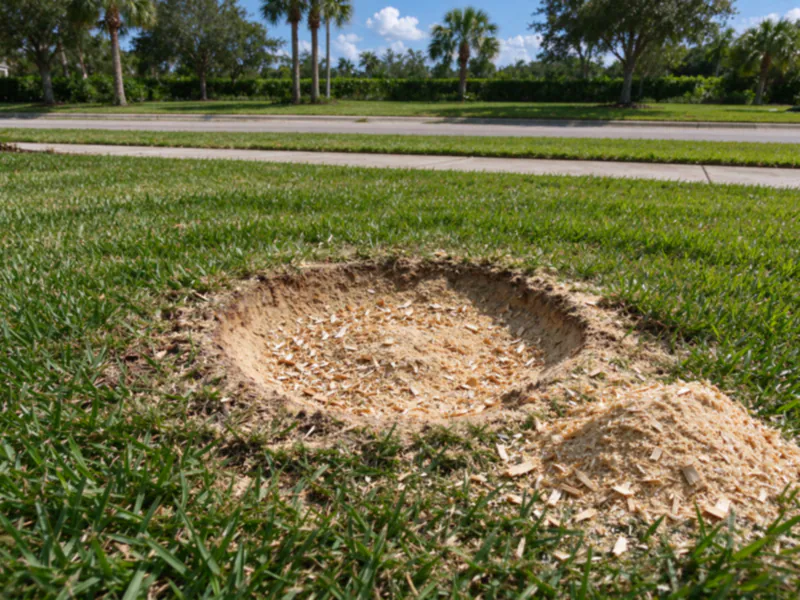
Usually a few inches below grade, enough to lay sod or mulch over the spot. Where pavers, an edge or a new planting will go, we grind deeper. Surface roots that would lift the lawn or catch a mower we grind out along their length.
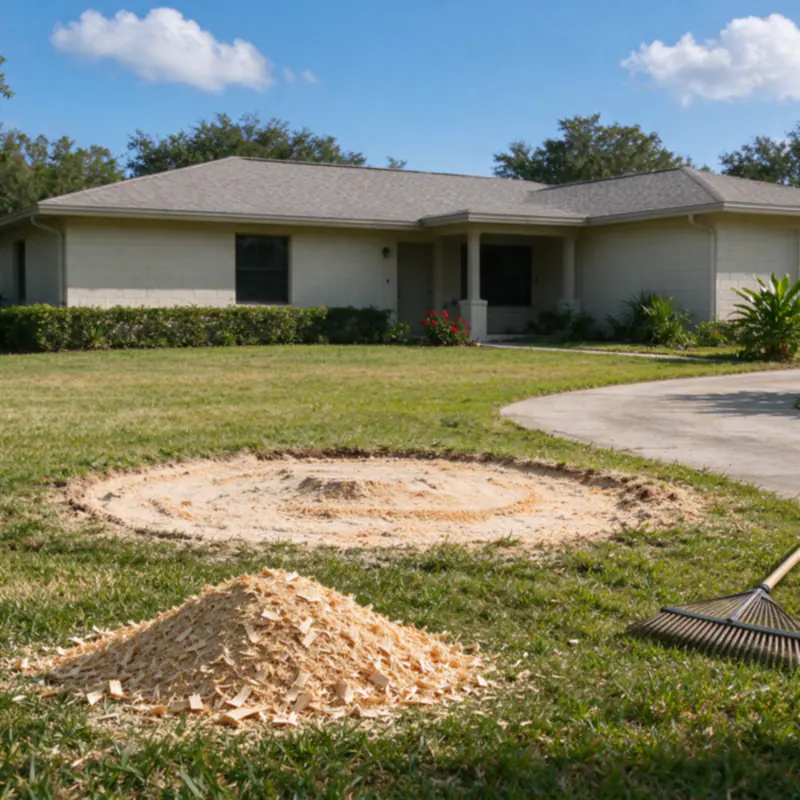
The grindings fill the hole. As they and the roots underneath decay, the spot settles a little, so a lawn over a ground stump usually needs a top-up of soil before or after sodding. If you don’t want the chips, we rake them out, haul them and fill the hole with soil. Near the street we keep the grindings out of the roadside swale, which in Palm Coast is part of the drainage you’re responsible for keeping clear.
Grind it or pull it?
It comes down to what goes on top. In a lawn, a planting bed or beside a driveway, grinding is enough: nothing heavy sits on the spot, and the decaying roots do no harm. Under a slab, a footing, a pool or the driveway itself, we pull the stump and its root ball with an excavator and backfill and compact the hole, because rotting wood under weight leaves voids and the ground settles. On a building lot that’s part of clearing and grubbing. Our stump grinding or stump removal guide covers the trade-off.
Pine, oak or palm?
Slash pine stumps are resinous and grind cleanly. Live oak and laurel oak are dense hardwood with wide surface roots and take longer, so hardwood stumps sit toward the top of the price range. Palm stumps are a mass of fibers, not wood; they grind out quickly and break down fast. A hardwood stump that’s cut but not ground often sprouts again from the base, while a pine doesn’t.
If the tree is still standing, that’s a different job. In Palm Coast any tree of 6 inches or more across at 4.5 feet needs a tree removal permit before it’s cut, and the stump grinding comes after.
Stumps on a newly cleared lot
On a building lot we handle stumps two ways. Under the slab, the driveway and the utility runs we pull them during clearing, because buried wood can’t stay under concrete. At the edges of the lot, near the trees you’re keeping and along the lot lines, grinding is usually better. Pulling a stump there tears up a wide plate of roots and sand, and some of those roots belong to the oak or pine you’re keeping a few feet away.
Grinding also suits trees you take down later, once the house is built. A tree removed under a Palm Coast permit may come with a replacement requirement, either planted or paid into the city’s tree bank at $220 to $580 per tree. Plant the replacement a few feet from the ground stump, not in the grindings, which make a poor bed while they break down.
Near the driveway, the house and the street
We stop short of anything the wheel could damage. Next to a driveway edge, a sidewalk or a foundation, we grind down to a safe distance and cut the last of the stump by hand. Near the street, where the service lines and the swale sit, we have lines located first and rake the grindings away from the swale.
Stump left by a storm?
When a pine comes down in a storm, we cut up and haul the trunk and limbs first and grind the stump afterward, once the root plate has settled back or been cut free. A tree that’s still standing but damaged is a different decision. On a lot with a home, Florida Statute 163.045 lets you remove it without a city permit when an ISA certified arborist or a Florida licensed landscape architect documents that it poses an unacceptable risk, as our selective clearing page explains. The brush and broken limbs around it we handle as brush clearing.
What it costs
We price stump grinding by the inch of diameter or by the stump. Our typical range is $2 to $6 per inch, and a first stump often runs $120 to $400, since the machine has to come out either way. Hardwood, big surface roots, tight access and hauling the grindings push a job up; several stumps on one visit bring the cost per stump down. Our stump grinding cost guide has the full breakdown.
After the grind
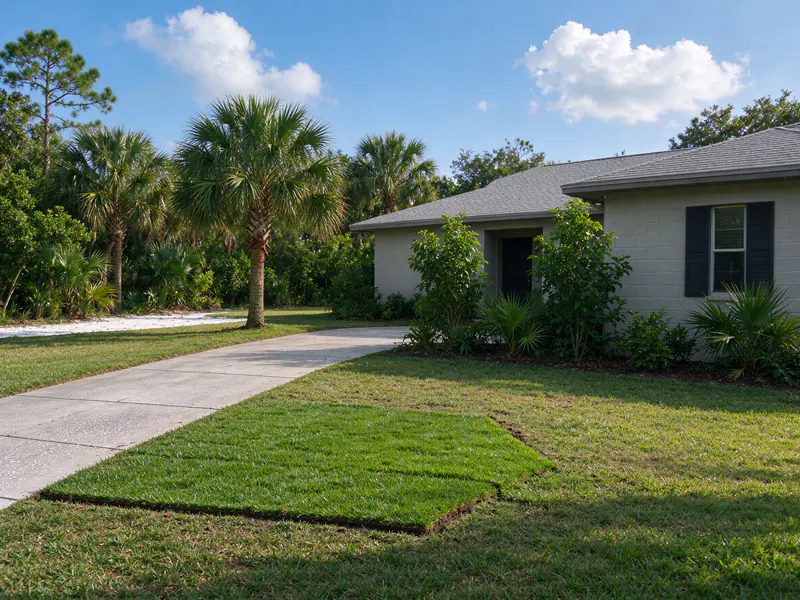
Once the spot is level, it’s ready for sod, seed or mulch. On a new home lot, the edges we grind after clearing stay stable along with the rest of the lot, and the city’s sod and silt fence requirements still apply. Our after clearing guide sets out what comes next.
What we do when we grind stumps
- Each stump measured and listed, with any surface roots to be ground
- Buried lines located before work near the street side or the house
- Stump ground to the agreed depth below grade
- Surface roots ground out where they would lift a lawn or path
- Grindings used to refill the hole, raked out or hauled, as agreed
- Area raked level and the swale left clear
Grinding compared with pulling a stump
| Stump grinding | Stump removal | |
|---|---|---|
| How | Toothed wheel grinds the stump below grade | Excavator pulls stump and root ball |
| Roots | Left to decay in the sand | Removed |
| Ground left | A hole of chips, settles a little | A large hole to backfill and compact |
| Fits | Lawns, beds, beside driveways and fences | Under a slab, footing, pool or driveway |
| Disturbance | Small, close to the stump | Large, can tear nearby roots and lines |