Last Updated:
Building a house, a garage or a driveway on a wooded lot? What’s under the ground matters as much as what stands on it. Sunward Palm Coast Land Clearing clears and grubs house sites, driveways and pads across Palm Coast and Flagler County, so your builder starts on clean sand.
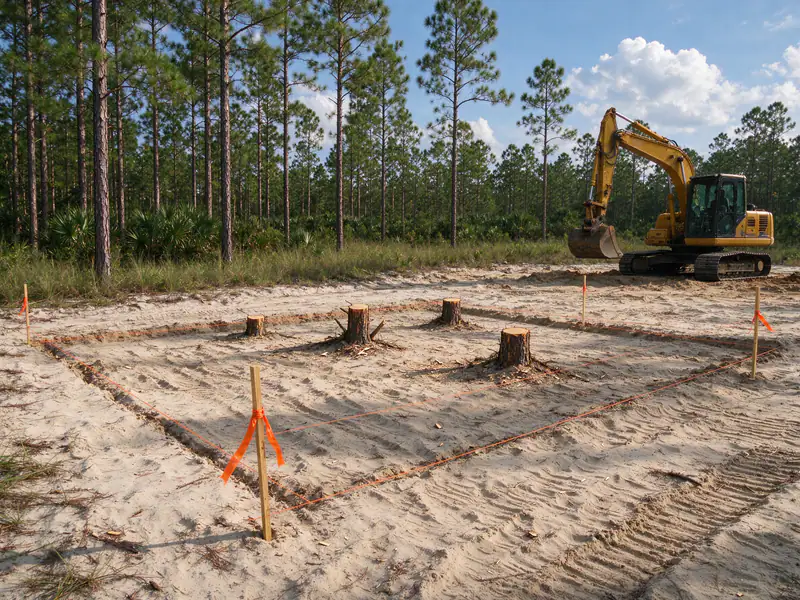
Clearing takes away what stands on the lot. Grubbing takes away what’s under it: the stumps, the root mats and the dark organic layer that builds up under woods. On a Palm Coast lot we do both together once the home’s building permit is issued, as part of lot clearing. The difference is where each goes: we clear the whole area being opened, and we grub only where something will be built.
Why can’t stumps stay under the slab?
Because they don’t stay stumps. A stump left under a slab rots over the years, and as the wood goes it leaves a void the sand above settles into. Concrete over that spot cracks or sags. Roots near the surface do the opposite under a driveway, lifting and cracking it as they grow. Organic soil compresses under load and keeps decaying, so we strip it from the footprint instead of burying it under fill.
So under the house, the garage, the driveway and the trench lines for water, sewer and power, we take everything organic out. Outside that footprint it’s a different decision, and we usually grind the stumps below grade or leave them, which disturbs less ground and protects the roots of the trees you’re keeping.
What happens when we walk the lot
We work from your survey or site plan, which shows the house footprint, the driveway and the setbacks. The grubbing area is the footprint plus a working margin for the forms, the driveway to the street and the utility runs. We flag the trees on your keep list and check how close each sits to the footprint, because a tree a few feet from the foundation loses much of its root system to the dig and the footing.
We also look at how the lot sits. Wet flatwoods sand and a high water table, common across Palm Coast, decide when the excavator can work without rutting and how fast open holes fill with water. Before any digging, we have buried lines along the street located through 811.
Have a site plan?
The footprint on the plan sets the grubbing area. Send it to us with a few photos of the lot.
How we grub a footprint
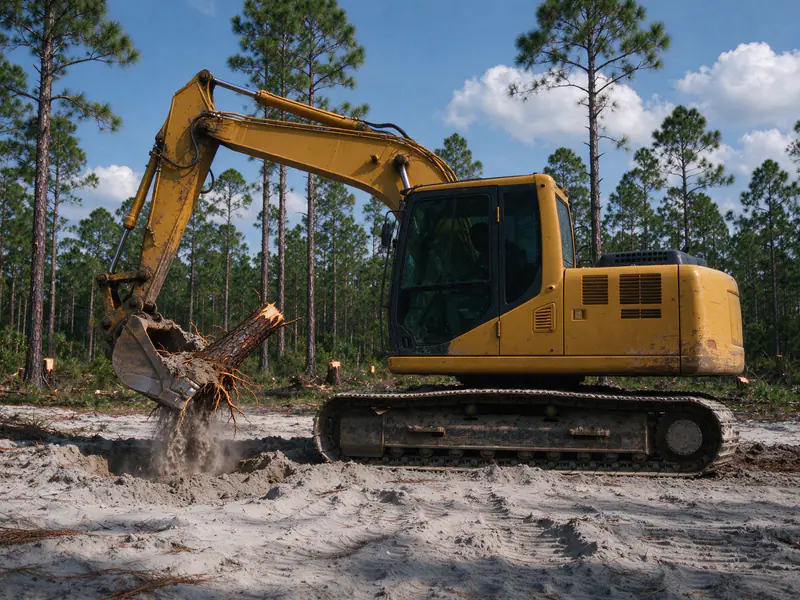
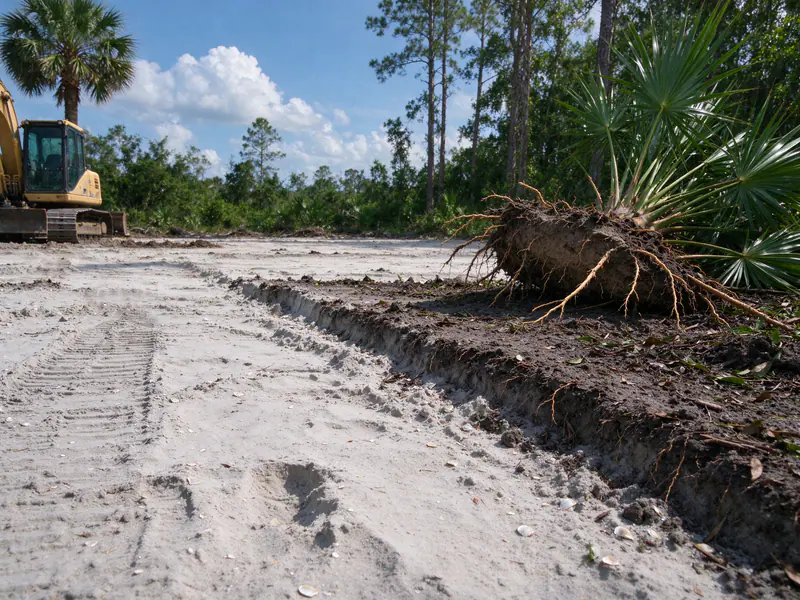
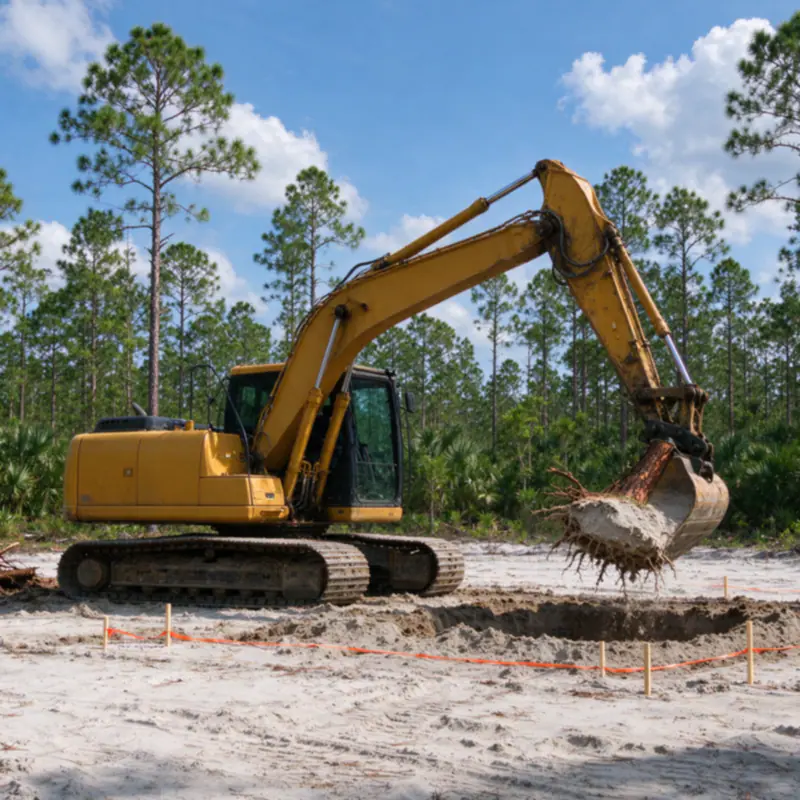
We fell and cut up the trees in the footprint first. Then we pull the stumps with an excavator or a root grapple, shake out the sand they hold and set them aside. We rake the root mat out of the ground and scrape back the dark organic layer until light sand shows. Old stumps and logs buried by an earlier clearing or a storm come out too, along with any dumped junk.
Depth follows the roots. Pines root shallow and wide; a big oak stump can carry roots well below a foot. We aren’t digging to a set depth; we’re after clean sand everywhere your builder will place fill or pour concrete.
The organic material goes one of two ways: we grind it into mulch for yard areas away from the house, or we haul it. It never gets mixed into the fill. Burning it is effectively ruled out on a platted lot, where Florida’s 300-foot residential setback can’t be met.
Building outside Palm Coast?
We grub the same way everywhere; the permits around it change. In unincorporated Flagler County, clearing is authorized through the building or development permit with a tree survey less than 24 months old, and the county’s tree rules exempt trees in or right beside a proposed single-family footprint from replacement. Inside Bunnell, the city’s Tree Removal/Land Clearing Permit Request asks for a tree survey or site plan, two photographs and the replacement method. Our Bunnell and unincorporated Flagler County pages cover each.
On bigger parcels we keep grubbing tight to the homesite and driveway and mulch the rest or leave it wooded, as on our acreage clearing page. That keeps bare ground to a minimum on wet flatwoods sand, which washes fast in the summer rains.
What about a tree right beside the footprint?
We stop grubbing at its protection fence. Roots that cross into the footprint get cut cleanly with a saw at the fence line, not torn out by the excavator, which gives the tree its best chance of recovering. Picking keepers set well back from the slab avoids most of this, which is why we settle the keep list before clearing, as on our selective clearing page.
Where our work stops and grading starts
We stop once the organics are out. Bringing in fill, compacting it, setting the pad height and shaping the lot so water runs to the street belong to the site work that follows under your builder’s engineered plan. In Palm Coast a new home needs a grading and drainage plan from a Florida professional engineer, most lots drain from the rear to the front swale, nothing may drain onto a neighbor, and for permits applied for from July 1, 2025 the final lot grading is certified. Our clearing or grading guide explains where the line falls.
Silt fence and the swale
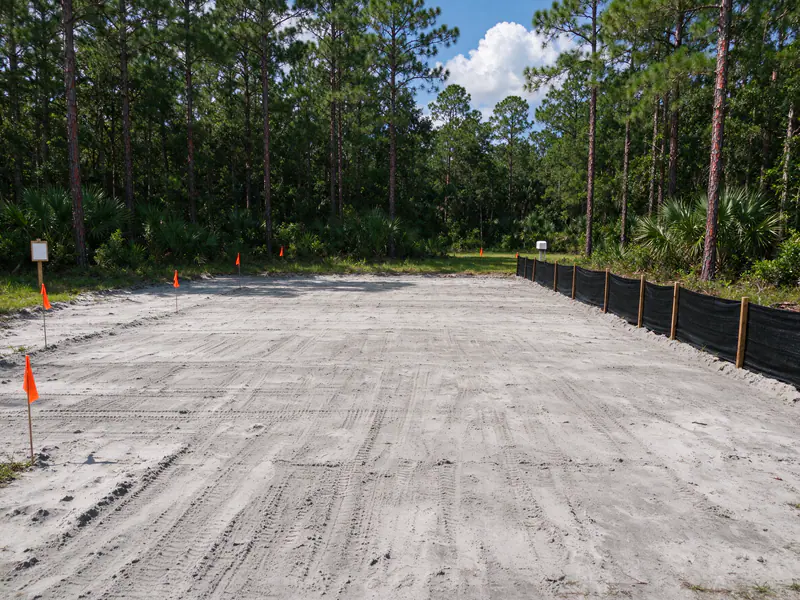
A grubbed footprint is the most erodible ground on your lot. We put silt fence along the frontage before work starts, and the city wants it left up through sod and landscaping so sand doesn’t wash into the roadside swale. The swale is yours to keep clear, and if it gets disturbed it’s sodded with bahia grass. Our after clearing guide covers the steps between a grubbed lot and the slab.
What does grubbing cost?
We price grubbing lot by lot from the walk, as a line inside your clearing estimate. What moves it is the number and size of the stumps in the footprint, the root volume, how much organic soil comes off and how far we haul it. Our typical range for clearing a quarter-acre lot is $800 to $3,000, and a lot with a closed-in footprint full of stumps sits toward the top of it; the Palm Coast cost guide shows how. To compare two estimates that draw the line in different places, see what land clearing includes.
What we do when we grub a footprint
- Footprint, driveway and utility runs staked or taken from the survey
- Buried lines located before digging
- Trees in the footprint felled and cut up
- Stumps and root balls pulled out with an excavator or grapple
- Root mats raked out and dark organic soil stripped back to light sand
- Old buried stumps, logs and debris removed where found
- Organic material hauled or ground, kept out of the future fill
- Holes left open or rough-filled for the builder, as agreed
Clearing, grubbing and grading
| Clearing | Grubbing | Grading | |
|---|---|---|---|
| What it does | Removes what stands above ground | Removes stumps, roots and organic soil below ground | Moves soil to set pad height and drainage |
| Where | The whole clearing area | Footprint, driveway, utilities | The whole lot, to the engineer's plan |
| Permit | Lot clearing permit and tree permit | Part of the lot clearing permit | Engineered plan; regrading permit for heavy equipment |
| Done by | Clearing contractor | Clearing contractor | Site work or excavation contractor |