Last Updated:
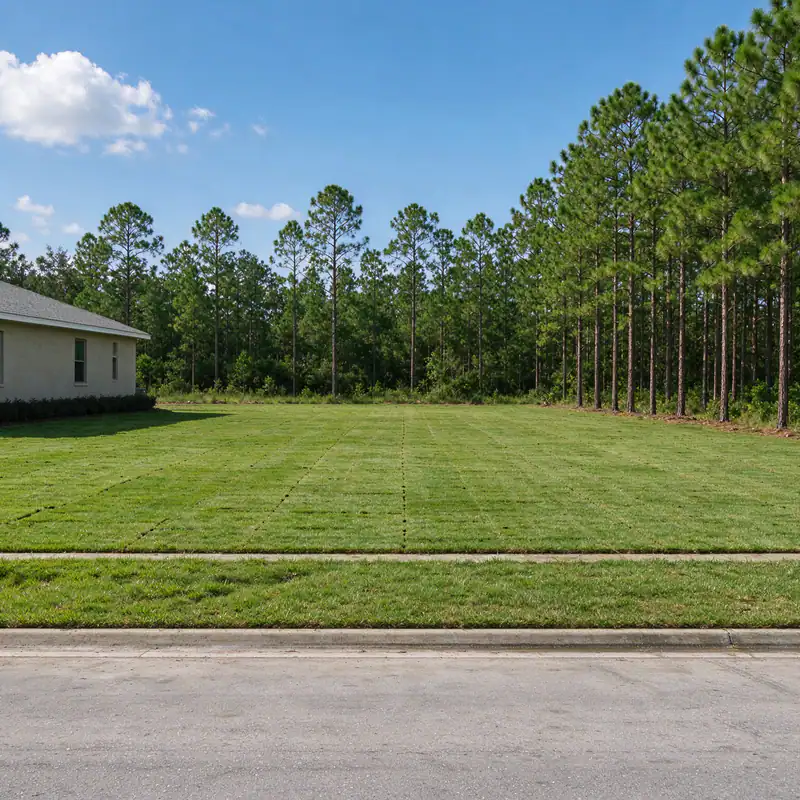
You bought the house, and the vacant lot next door came with it, or you picked it up later. Now it’s a wall of palmetto and pine right against your yard. Palm Coast doesn’t let a vacant lot be cleared until a house permit is issued for it, with one exception: the lot directly beside a home you own. Sunward Palm Coast Land Clearing clears these side lots for a bigger yard, a garden, room around a pool or garage, or just to push the woods back from your house.
The exception comes with conditions, and we sort those out before any machine shows up.
Does your lot qualify?
The vacant lot has to sit directly beside a lot with a permitted home. You have to own both, and the two have to be tied together by a binding lot agreement. In the city’s words, to make changes before getting a building permit you must own both the vacant lot you want to clear and the neighboring lot that already has a permitted structure. A lot across the street or two doors down doesn’t qualify, and neither does a lot owned by a relative or a separate company.
Then the clearing itself needs a permit. The application asks for a notarized authorized-agent form if someone applies for you, a scope of work, a survey or site plan showing the trees of 6 inches and over to be removed and kept, a grading plan that drains the lot back to front, and proof of ownership. Grading a vacant lot needs a sealed topographic survey. The city says the permit is usually ready within a week, and it stays active for six months. Every disturbed area has to be sodded or seeded.
What we check first
Paperwork comes first: ownership of both lots, where the lot agreement stands and whether the permit has been applied for. We can’t put the clearing on the schedule until the permit is issued, because Palm Coast’s fee schedule charges $1,000 or double the permit fee, whichever is higher, for a lot cleared before then.
On the lot, we flag the trees on the survey. Any tree of 6 inches and over that comes down needs tree removal approval like on any lot. We also look for gopher tortoise burrows, wet ground and a route in for the machine that doesn’t cross your yard or septic area.
Own the lot beside you?
Send both parcel numbers and photos of the side lot. We can have the scope ready when the permit is.
How we clear it
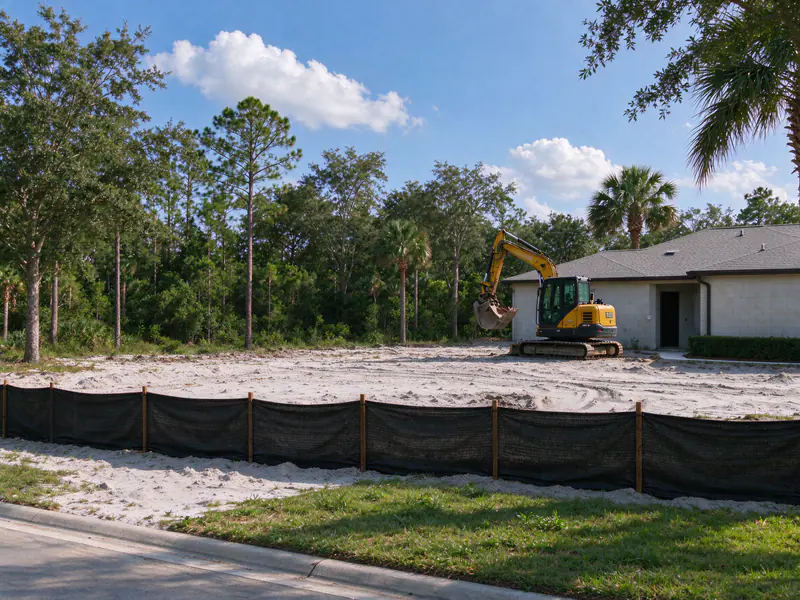
Silt fence goes up first along the street frontage and the downhill side, because the city requires erosion control and a bare lot drains straight toward the swale. Then the brush and the permitted trees come out. Where the lot will become lawn we grind the stumps below grade; where you’ll build something later, we pull them. Keepers get fenced at the drip line, with saw work inside the fence, as in selective clearing. We mulch or haul the debris; burning isn’t possible next to homes.
Leaving it stable
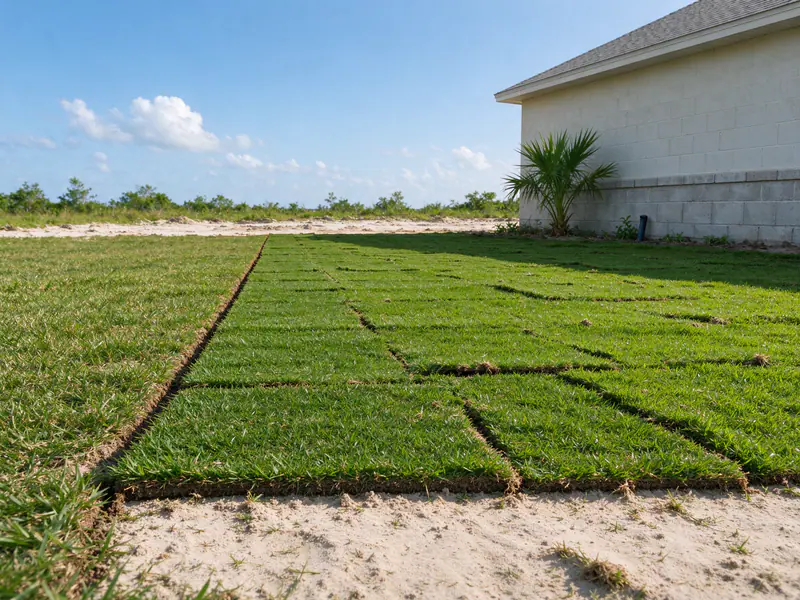
A cleared side lot can’t sit as bare sand. The permit requires grading that drains back to front, toward the roadside swale and not toward your house or the neighbor on the other side, and every disturbed area sodded or seeded. The silt fence stays until the ground has taken, and the swale stays clear. Our after clearing guide covers the order.
Tortoises and wet ground
Side lots left alone for years are where gopher tortoises like to dig, on the drier sand. Any work within 25 feet of a burrow needs an FWC relocation permit first, so we look for burrows on the walk instead of finding them with the machine. At the other end, a side lot that holds water after rain may raise the question of clearing near wetlands, where a state permit can apply. Much of Palm Coast sits on poorly drained flatwoods sand with a high water table in the wet season.
How long does it take?
The permit and the tree inspection set the calendar. The city says a lot clearing permit is usually ready within a week, and Urban Forestry inspectors aim to call within a week of a tree removal request. Once both are issued, the clearing on a quarter-acre side lot is usually short, often a day or two depending on the stumps and haul-off, with the sod or seed after. The permit is active for six months, so we plan the clearing, grading and sod to finish inside that window. Wet weeks in the summer rains slow machines on flatwoods sand.
Who handles the grading?
Because nothing is being built on the lot, its grading has to stand on its own. The permit’s grading plan sends water from the back of the lot to the front swale, not across your yard and not onto the neighbor’s lot, and a sealed topographic survey sets it out. Where heavy equipment regrades the lot, the city requires a lot regrading permit too. That’s site work after clearing; our clearing or grading guide explains where our part stops.
Only want part of it opened?
That’s common. Clearing a strip beside the house, or the front half, is still clearing and needs the same permit and agreement. Cutting the brush down and leaving the trees is a smaller job. Palm Coast treats brush averaging over three feet within 30 feet of a home on an undeveloped lot as a fire hazard, and brush clearing can keep the strip beside your house within that rule while the trees stay. The city’s Urban Forestry office can confirm what a brush-only job on your lot needs.
What it costs
Clearing the side lot falls within our lot clearing ranges: our typical range for a quarter acre is $800 to $3,000, with keepers, stumps and haul-off setting where in the range yours lands. The survey, the lot agreement, the permit, any tree bank payments at $220 to $580 per tree and the sod are separate, and they’re worth adding up before you decide how much of the lot to open.
What we do on a side lot
- Ownership, agreement and permit status checked before scheduling
- Survey trees flagged: kept, removed or left as a screen
- Silt fence along the street frontage and the downhill side
- Brush and the permitted trees cleared; stumps ground or pulled as planned
- Debris mulched or hauled
- Ground left ready for the grading, sod or seed the permit requires
Three ways to use the lot next door
| Clear it all to lawn | Clear part, keep a screen | Cut the brush only | |
|---|---|---|---|
| Permit | Lot clearing permit and tree permit | Lot clearing permit and tree permit | No clearing permit; trees stay |
| Lot agreement | Required | Required | Not needed for brush work |
| Ground left | Sod or seed over the whole lot | Sod or seed where disturbed | Chips, trees standing |
| Fits | A bigger yard or garden | Privacy kept along the far line | A neighbor-side fire hazard strip |