Palmetto and underbrush
Brush clearing
Saw palmetto, gallberry, wax myrtle and vines cut back to ground level, including the brush Palm Coast treats as a fire hazard beside a home.
St. Augustine South, St. Johns County
Palmetto and scrub oak crowding your house in St. Augustine South, or stumps left in a sandy yard? We walk for tortoise burrows first, cut the scrub back from the house, grind the stumps and leave the sand covered.
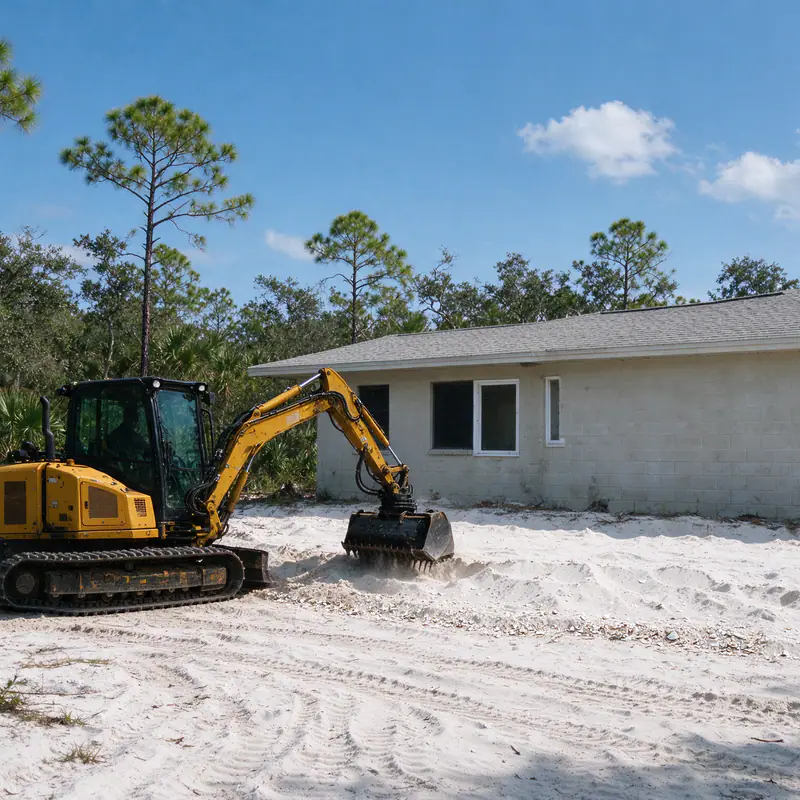
What changes a clearing job in St. Augustine South
Start with the land
Palmetto and scrub oak cut back from walls, fences and the driveway.
Brush clearingGopher tortoises favor dry scrub sand; work stays 25 feet away without a permit.
Gopher tortoise rulesCounty tree-inch rules met by keeping trees where possible, footprint grubbed.
Lot clearingServices
Palmetto and underbrush
Saw palmetto, gallberry, wax myrtle and vines cut back to ground level, including the brush Palm Coast treats as a fire hazard beside a home.
Below grade
Stumps ground below grade in lawns, along driveways and in the yard, with a plain answer on when a stump has to come out whole instead.
Keeping the good trees
Brush and unwanted trees out around the oaks and pines you are keeping, with the keepers flagged before any machine arrives and the permit list in order.
After the house permit
A platted lot opened for the slab, driveway and utilities once the home permit is issued, with the keepers marked, silt fence up and the swale left clean.
How the work runs
We walk the dry scrub sand for gopher tortoise burrows before any cutting.
On a building lot we check the tree-inch minimum for your zoning and count the keepers.
We cut the scrub low, grind stumps, fence keepers and leave chips to hold the sand.
We haul the debris and leave the yard or lot covered and tidy.
Last Updated:
St. Augustine South is an unincorporated community just south of the City of St. Augustine, about 22 miles north of Palm Coast, so St. Johns County’s rules apply here rather than the city’s. Most of what we do is brush and stumps around existing homes, with the occasional building lot. Sunward Palm Coast Land Clearing works this dry scrub sand the way it asks to be worked.
There might be. Much of the community sits on excessively drained scrub sand, exactly the ground gopher tortoises dig in. So every job starts with us walking the lot for burrows, and any work within 25 feet of one needs an FWC relocation permit first. If we find one, we plan around it rather than through it.
On dry sand, the palmetto and scrub oak next to a home are the fuel a ground fire would use to reach it. We cut them back from walls, decks, fences and the driveway with a brush cutter or small mulcher and keep them low as they regrow, which takes away most of that fuel without clearing the whole lot. Keepers get fenced, and we leave the chips as a layer that holds the sand, because bare scrub sand dries out and blows. Our brush clearing page covers the work.
Palmetto will come back. It regrows from trunks lying along and just under the sand unless they’re pulled, as our palmetto guide explains, so we recut cut areas as they grow back.
Ground, in a sandy yard. Pulling a stump tears up the dry sand around it and leaves a patch that blows. We grind below grade, let the grindings fill the hole and top it with soil before you plant. Our stump grinding cost guide shows what moves the price, and our forestry mulching cost guide does the same for brush work. We haul debris, since a pile burn can’t meet Florida’s 300-foot residential setback on a street of homes.
Then the county’s tree count comes in. Your site plan has to meet a minimum number of tree inches set by zoning, and existing trees of 2 inches and up, measured at 4.5 feet, can count toward it; trees in easements or wetlands and exempt invasive species don’t. Every healthy oak and pine we keep outside the footprint means less planting later, which is why we start with selective clearing. The footprint itself still gets grubbed to clean sand, as on any lot clearing job, and we do the burrow walk well before the house permit date so there’s time to deal with one.
Why the order matters
On scrub sand we check for tortoises before anything else, because a burrow can change the plan.
Bare scrub sand dries and blows, so we put chips down straight away.
Places, routes and the permit office
St. Johns County Growth Management: residential site plans and tree requirements for unincorporated lots.
The community's soil sample point is Paola fine sand, excessively drained scrub sand, the kind of ground tortoises dig in. Lots are walked for burrows before work, and work within 25 feet of one needs an FWC permit.
It is unincorporated, so St. Johns County's rules apply. Residential site plans must meet a tree-inch minimum by zoning, and existing trees of 2 inches and up may count toward it.
Our typical range for mulching is $125 to $300 per machine hour, and for stump grinding $2 to $6 per inch of diameter, with a first stump at $120 to $400. We set the price after seeing the yard.
Yes. Palmetto regrows from trunks lying along and just under the sand unless they are pulled out, so cut areas are recut as they grow back.
About 22 miles north in a straight line, just south of the City of St. Augustine.
Get a St. Augustine South estimate
Send the address, what needs cutting back or grinding, and a few photos.
(386) 465-4658Outside these hours, emergency calls only.